

Understanding Different Garden Soil Types for Your Landscape: A Complete Guide to Soil Characteristics and Improvement
Understanding different garden is essential because soil texture, structure, and pH directly determine drainage, nutrient availability, and plant health for any landscape. This guide explains how common garden soils—loam, clay, sand, silt, peat, and chalk—differ in feel and function, shows simple home tests to identify them, and outlines practical amendment strategies to correct drainage, compaction, and nutrient issues. Many homeowners struggle with patchy plant growth, water runoff, or beds that dry out quickly; by learning soil basics and targeted fixes you can improve plant performance and reduce maintenance. The article maps the main topics you’ll need: soil type characteristics and an easy comparison table, step-by-step identification methods including jar and ribbon tests plus pH testing, the best soil amendments and application recipes, plant-to-soil matching for vegetables and ornamentals, and problem→solution steps for drainage and sandy soil remediation. Throughout, keywords like garden soil types, soil texture structure pH, and best soil amendments for garden soil are used to help you diagnose and act with confidence.
What Are the Main Types of Garden Soil and Their Characteristics?
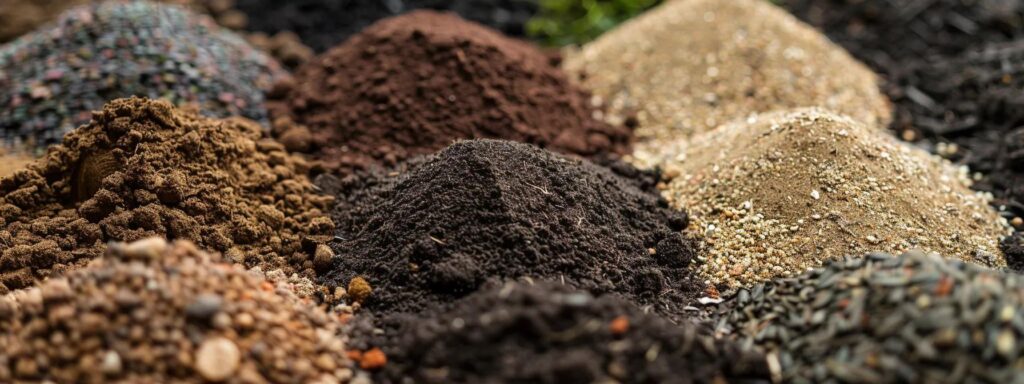
Garden soil types differ mainly by particle size and organic matter, and those differences control drainage, water retention, and nutrient availability. Texture—how soil feels—provides immediate clues: sandy soils feel gritty and drain fast, while clay soils feel sticky and hold water tightly; loam balances sand, silt, and clay for reliable fertility. Structure—aggregation of particles—affects root penetration and aeration, and pH influences nutrient availability so that the same soil texture can behave very differently for different plants. Understanding these properties helps you choose amendments and plants that match existing conditions and reduces trial-and-error in landscape planning. The following table summarizes core differences so you can quickly compare types and choose appropriate management actions.
| Soil Type | Characteristic (texture, drainage, waterRetention, pHRange) | Typical Uses/Plants |
|---|---|---|
| Loam | Crumbly texture; balanced drainage and good water retention; moderate organic matter | Vegetable beds, lawns, mixed perennial borders |
| Clay | Sticky when wet; slow drainage; high water retention but poor aeration; often neutral to alkaline | Moist-loving shrubs, rain gardens with amendment |
| Sandy | Gritty; very fast drainage; low water and nutrient retention; often acidic to neutral | Drought-tolerant perennials, native prairie mixes, bulbs |
| Silt | Smooth, flour-like; moderate drainage and retention; can compact | Fertile vegetable patches with structure management |
| Peat | Spongy; very high water retention; acidic pH | Acid-loving plants, soil mixes for moisture-loving beds |
| Chalk | Stony, alkaline; free-draining; low organic matter | Plants tolerant of alkaline soils, Mediterranean shrubs |
This comparison table clarifies which soil types supply quick drainage versus long-term water storage, and it sets up the next section on simple tests to identify what you actually have in your yard.
What Defines Loam, Clay, Sand, Silt, Peat, and Chalk Soils?
Loam is a balanced mix of sand, silt, and clay that offers the best combination of drainage, aeration, and nutrient retention, making it ideal for most garden plantings. Clay soil has very fine particles that stick together; it drains slowly and holds nutrients but can restrict roots when compacted, so mechanical loosening and organic additions help. Sandy soil is coarse, drains quickly, and loses nutrients and moisture rapidly, so it benefits most from added organic matter and mulches. Silt feels smooth and holds water moderately but can compact and form a crust, requiring structure improvement. Peat is organic and spongy with very high water retention and an acidic pH, useful for acid-loving plants but requiring careful sourcing; chalky soils are alkaline, coarse, and free-draining, favoring specialist plants adapted to higher pH. These sensory cues help you recognize each soil—gritty, sticky, crumbly—and guide immediate remedial choices.
How Do Soil Texture, Structure, and pH Affect Garden Soil Quality?
Soil texture determines pore size distribution and therefore drainage and water retention: sand → fast drainage, clay → slow drainage, silt and loam → intermediate behavior that supports robust root systems. Soil structure—the arrangement of particles into aggregates—affects root growth and aeration, where well-aggregated soil resists compaction and supports microbial life, while poor structure leads to compaction and restricted root development. Soil pH controls nutrient availability because certain nutrients become less soluble outside optimal pH ranges; for example, iron becomes less available in alkaline soils, which can cause chlorosis in sensitive plants. These three attributes—texture, structure, pH—interact, so improving one (like adding organic matter to sandy soil) can change overall performance; next we’ll look at how to identify these properties at home so you can plan targeted improvements.
How Can You Identify Your Garden Soil Type?
Identifying your garden soil type starts with simple tactile and visual tests that reveal particle behavior and layering, allowing quick, actionable decisions about amendments and plants. A jar test separates sand, silt, and clay by settling rates to estimate percentages, while a ribbon test and feel test give instant field guidance about texture and stickiness. pH testing—via home kits or lab analysis—adds a chemical dimension that informs plant selection and amendment needs like lime or sulfur. Combining these diagnostic methods gives a practical profile you can act on, and when tests are ambiguous a professional soil test provides nutrient and organic matter data to refine long-term plans. Below are clear, numbered steps for the most useful home tests.
What Simple Tests Reveal Soil Texture and Composition?
A jar test, ribbon test, and tactile assessment let you estimate proportions of sand, silt, and clay without special equipment, and each method gives complementary information. For a jar test, mix soil and water in a clear container, let it settle for 24 hours, and read layers: sand settles first, silt next, and clay last; measure layer thicknesses to estimate texture percentages. The ribbon test involves moistening a soil pinch and rolling it between your fingers to form a ribbon—long sticky ribbons indicate high clay content, short gritty crumbs indicate sand. Tactile cues—gritty, smooth, or sticky—offer quick field diagnoses that guide whether you need more organic matter, mechanical aeration, or pH adjustment. These hands-on tests prepare you for the next step: interpreting pH and when to pursue laboratory analysis.
Relating Visual Soil Structure to Texture and Management
The simplest methods which includes a variety of aspects of soil structure and soil texture. On the other hand, some quantitative measures are highly dependent on soil texture, such as soil.
Relating visual evaluation of soil structure to other physical properties in soils of contrasting texture and management, RML Guimarães, 2013
How Does Soil pH Testing Inform Plant and Soil Management?
Soil pH testing identifies acidity or alkalinity that shapes nutrient availability and plant suitability, and testing options range from inexpensive home kits to comprehensive lab analyses. Home test kits deliver a quick pH range that helps decide immediate steps—lime to raise pH or sulfur to lower it—whereas lab tests provide precise pH with recommendations for amendment rates and nutrient analysis to correct deficiencies. Many plants have clear pH preferences, and adjusting pH can unlock existing soil nutrients; however, pH changes occur gradually, so expect months for full effect after applying amendments. When in doubt, a targeted lab test clarifies both pH and nutrient status so you apply only what the soil needs; that data then informs the specific amendment strategies discussed next.
Soil pH and Plant Nutrient Availability: A Historical Review
The pH of the soil in relation to the availability of plant nutrients has been an important research topic in soil fertility and plant nutrition. In the 1930 and 1940 s, a diagram was proposed that showed how the availability of major and minor nutrients was affected by the pH. This conceptual diagram, developed by Emil Truog based on earlier work, included 11 nutrients. The width of the band at any pH value indicated the relative availability of the plant nutrient. The band did not present the actual amount, as that was affected by other factors such as the type of crop, soil and fertilization. For the 11 nutrients on the diagram, a pH of around 6.5 was considered most favorable.
Soil pH-nutrient relationships: the diagram, AE Hartemink, 2023
What Are the Best Soil Amendments for Improving Garden Soil Quality?
Effective soil amendments change organic matter, structure, and sometimes chemistry; choosing the right amendment depends on the soil type and the problem—poor drainage, low water retention, or nutrient deficiency. Compost increases organic matter and soil biology, improving water retention in sands and structure in clays, while well-aged manure supplies nutrients but must be applied carefully to avoid salts. Peat moss retains moisture and acidifies soil for certain plants but requires sustainable sourcing and often alternative organic matter choices; gypsum can improve some clay structures without altering pH significantly and is useful when sodium issues aren’t present. Perlite and vermiculite are amendments for potting mixes that alter aeration and retention, and mulch layers protect surface soil and reduce evaporation. The table below maps common amendments to purposes and the soil types they help.
| Amendment | Attribute (Purpose/Application Rate/Benefits) | Value (Which Soil Types It Helps) |
|---|---|---|
| Compost | Adds organic matter; apply 2–3 inches tilled into topsoil; improves water retention and structure | Sandy, clay (to improve aggregation), loam (maintenance) |
| Aged Manure | Nutrient-rich; apply 1–2 inches or mixed into compost; improves fertility but must be well-aged to avoid burn | Loam, sandy (nutrient boost after organic matter) |
| Peat Moss | Increases moisture retention and acidity; mix 10–20% for beds; supports acid-loving plants | Sandy beds, peat-tolerant plantings |
| Gypsum | Calcium sulfate improves clay flocculation; apply based on soil test; increases permeability without raising pH | Heavy clay soils with structure issues |
| Perlite/Vermiculite | Improves aeration or water-holding in mixes; use in container mixes or seed starting | Potting mixes, seed starts |
This mapping clarifies which amendments address specific deficiencies so you can match product to problem; the next subsection outlines mechanisms and application cautions in detail.
How Do Compost, Manure, Peat Moss, and Gypsum Enhance Soil Fertility and Structure?
Compost supplies humus and microbial food, which increases cation exchange capacity and improves water retention in sandy soils while promoting crumb structure in clays. Manure adds plant-available nutrients and organic matter but must be well-aged to avoid high soluble salts and over-application; it’s most effective when blended into compost first. Peat moss holds large volumes of water and lowers pH, making it useful for acid-loving plantings, although alternatives like well-decomposed leaf mold can produce similar benefits with better sustainability. Gypsum supplies calcium and sulfate that help flocculate clay particles, improving permeability and root penetration without significantly changing soil pH, and is most effective where sodium or dispersion is the structure issue. Understanding how each amendment modifies physical or chemical properties helps you choose targeted, evidence-based treatments rather than guessing.
Which Amendments Are Recommended for Different Soil Types?
Tailored amendment recipes accelerate improvement: sandy soils typically need repeated organic matter additions—apply 2–3 inches of compost and a 2–3 inch mulch annually to build retention—while clay soils benefit from organic matter plus mechanical decompaction and, where appropriate, gypsum applications based on soil testing. Loam usually requires maintenance doses of compost and occasional mineral supplements informed by a nutrient test, while peat or acidic mixes are best for pH-sensitive plantings where organic acidifiers are appropriate. For established beds, apply topdress compost annually and incorporate more heavily when renovating. These targeted guidelines reduce excess inputs and speed functional improvements in drainage, aeration, and nutrient cycling.
Which Plants Thrive in Different Garden Soil Types?
Matching plants to soil type improves establishment and reduces the need for heavy amendment; many species are adapted to particular textures and pH ranges and will perform reliably when placed correctly. Vegetables and many ornamentals prosper in loam for its balanced moisture and nutrient supply, while drought-tolerant natives and Mediterranean plants do well in sandy, free-draining soils. Clay-tolerant trees and shrubs that can tolerate slower drainage and occasional wet feet are better choices than sensitive perennials that demand looser soils. Below is a quick reference table pairing common plant types with preferred soil characteristics to guide planting decisions and reduce trial-and-error.
| Plant | Preferred Soil Type | Preferred pH Range / Water Needs |
|---|---|---|
| Tomato (vegetable) | Loam | pH 6.0–6.8; consistent moisture |
| Lavender (flower/shrub) | Sandy/Free-draining | pH 6.5–7.5; low water once established |
| Daylily (perennial) | Clay (amended) | pH 6.0–7.0; tolerates variable moisture |
| Blueberries (shrub) | Peat/Acidic mix | pH 4.5–5.5; steady moisture |
| Native grasses | Sandy or loamy native soils | pH varies; low to moderate water |
This table simplifies plant selection so you can match species to existing conditions; the following subsection explains why native plants often require fewer interventions.
What Vegetables, Flowers, Shrubs, and Trees Prefer Loam, Clay, or Sandy Soils?
Vegetables like lettuce, carrots, and tomatoes flourish in loam because its balanced texture supports root development and steady moisture; these crops benefit from regular compost and balanced fertilization. Clay-friendly shrubs and trees such as certain maples and serviceberries tolerate moisture and can succeed when soil structure is improved with organic matter and aeration. Sandy soils suit bulbs, native grasses, and drought-tolerant perennials that avoid waterlogging and thrive with mulching and organic matter to boost retention. Choosing species adapted to your soil type reduces watering and amendment needs while promoting resilience, so plant selection is often the most cost-effective soil management strategy.
How Do Native Plants Adapt to Local Soil Conditions?
Native plants display traits—deeper root systems, efficient water-use physiology, and tolerance of local pH or mineral profiles—that let them thrive with less supplemental irrigation and fewer soil amendments. Deep roots access moisture from lower horizons, while species adapted to alkaline or sandy soils have physiological adjustments that prevent nutrient stress. Using native plants reduces long-term maintenance and supports local biodiversity; choosing the right natives means matching species to the soil texture, structure, and pH you identified earlier. Transitioning to native-dominant plantings often yields lower inputs and better ecological outcomes, and it leads naturally into practical steps for managing problem soils.
How Can You Manage Common Soil Problems in Your Landscape?
Addressing soil problems begins with diagnosis—identify whether issues stem from texture, compaction, drainage, or nutrient imbalance—and then apply short-term fixes and long-term strategies tailored to the cause. Poor drainage often requires improving structure through organic matter, installing sub-surface or surface drainage features, or converting problem beds to raised beds; compaction benefits from aeration, deep-rooting cover crops, and mechanical decompaction. Sandy soil water loss is managed with regular organic matter additions, mulching, and choosing slow-release fertilizers to reduce leaching. The lists below present common problems and concise remediation steps so you can act methodically and choose materials appropriately.
Common soil problems and why they matter:
- Poor drainage causes root rot and plant stress when waterlogged conditions persist.
- Compaction reduces root growth and aeration, limiting nutrient uptake and water infiltration.
- Low water retention in sandy soils leads to frequent irrigation and nutrient leaching.
Summary: Proper diagnosis directs whether to add organic matter, aerate mechanically, or install drainage features, and these steps lead into specific techniques described next.
What Are Effective Solutions for Poor Drainage and Soil Compaction?
To fix poor drainage, start by increasing organic matter at the surface and, where needed, construct raised beds or French drains to move water away from root zones; these interventions improve root health and reduce standing water. Mechanical aeration—core aeration or careful subsoiling—breaks compaction layers, while planting deep-rooted cover crops or tap-rooted species helps create bio-channels that improve infiltration over seasons. For heavy clay, combining gypsum where appropriate with regular organic matter reduces stickiness and increases aggregate stability, but a soil test should guide gypsum use. These methods vary in timeline—raised beds and drainage installations provide faster relief, while organic matter and biological approaches improve soil over seasons—so choose the combination that fits your urgency and budget. problems with bark mulch.
Managing Soil pH and Crop Nutrients for Optimal Growth
Assessing present and reserved-nutrient status of the soil, understanding its nutrient-release and nutrient-holding capacity, and knowing the plant and environmental factors that impact nutrient availability are necessary to guide fertilization rates, sources, and method of application of additional nutrients. The information here is intended to provide fundamental principles to help the reader understand what to do, and why, when making management decisions related to phosphorus (P), potassium (K), secondary macronutrients (calcium [Ca], magnesium [Mg], and sulfur [S]), micronutrients (boron [B], chlorine [Cl], copper [Cu], iron [Fe], manganese [Mn], molybdenum [Mo], and zinc [Zn]), and pH.
Managing soil pH and crop nutrients, FG Fernández, 2009
How to Improve Water Retention and Nutrient Deficiency in Sandy Soils?
Improving sandy soils relies on repeated additions of and surface mulching to increase water-holding capacity and nutrient retention over time. Apply a 2–3 inch layer of compost and incorporate it into the top 6–8 inches where feasible, then topdress annually to build humus; mulches of shredded bark or composted wood at 2–3 inches reduce evaporation and moderate soil temperature. Use slow-release or organic to reduce leaching and schedule irrigation to encourage deeper root growth rather than frequent shallow watering. These combined measures gradually shift sandy soil behavior toward more stable moisture and nutrient dynamics, setting the stage for healthier plantings and less intensive maintenance.
How Does Northwest Landscape Supply Support Your Garden Soil Needs?
Northwest Landscape Supply provides practical support for homeowners and landscapers seeking high-quality materials and local expertise, offering weed-free topsoil, compost, mulch, gravel, and rock suitable for remediation and planting projects. Their product range emphasizes weed-free, high-quality landscaping materials and includes topsoil and compost as core offerings, which are fundamental when improving sandy soils, building raised beds, or renovating compacted areas. Delivery services and customer advice help remove logistical barriers to using bulk amendments, especially for large renovation tasks where transport is a limiting factor. For readers ready to act, Northwest Landscape Supply combines product availability with local guidance to simplify sourcing and application for soil improvement projects while aligning with your project timeline and materials needs.
What High-Quality, Weed-Free Soil Products Does Northwest Landscape Supply Offer?
Northwest Landscape Supply stocks a comprehensive product range that includes topsoil, compost, mulch, and rock, all described as high-quality and weed-free to reduce contamination risks in new beds and mixes. Topsoil and compost are central for rebuilding soil structure and increasing organic matter, while mulch and rock support moisture conservation and erosion control; these categories match the amendments and materials recommended earlier in this guide. Their emphasis on weed-free products helps ensure that added organic matter doesn’t introduce weed pressure into renovated beds, making establishment easier and reducing follow-up maintenance. These product categories provide practical options to implement the amendment plans described previously.
How Can Expert Advice and Delivery Services Help Your Landscaping Projects?
Expert advice helps translate soil test results and home diagnostics into a clear amendment plan—what to add, how much, and when—to avoid over- or under-application and to prioritize interventions that deliver measurable improvements. Delivery services reduce project friction by bringing bulk topsoil, compost, or rock directly to the site, enabling timely renovation and consistent material quality without multiple trips. Combining product guidance with delivery and scheduling support shortens project timelines and improves success rates, particularly for larger landscapes or when working with contractors.
- Product selection: Choose weed-free compost and topsoil to avoid introducing contaminants.
- Logistics: Use delivery to handle bulk materials efficiently and reduce project delay.
- Advice: Seek guidance to match product types (topsoil, compost, rock) to specific soil problems.
These service elements together make it easier to put the soil improvement strategies in this guide into practice and achieve more predictable, long-term landscape outcomes.